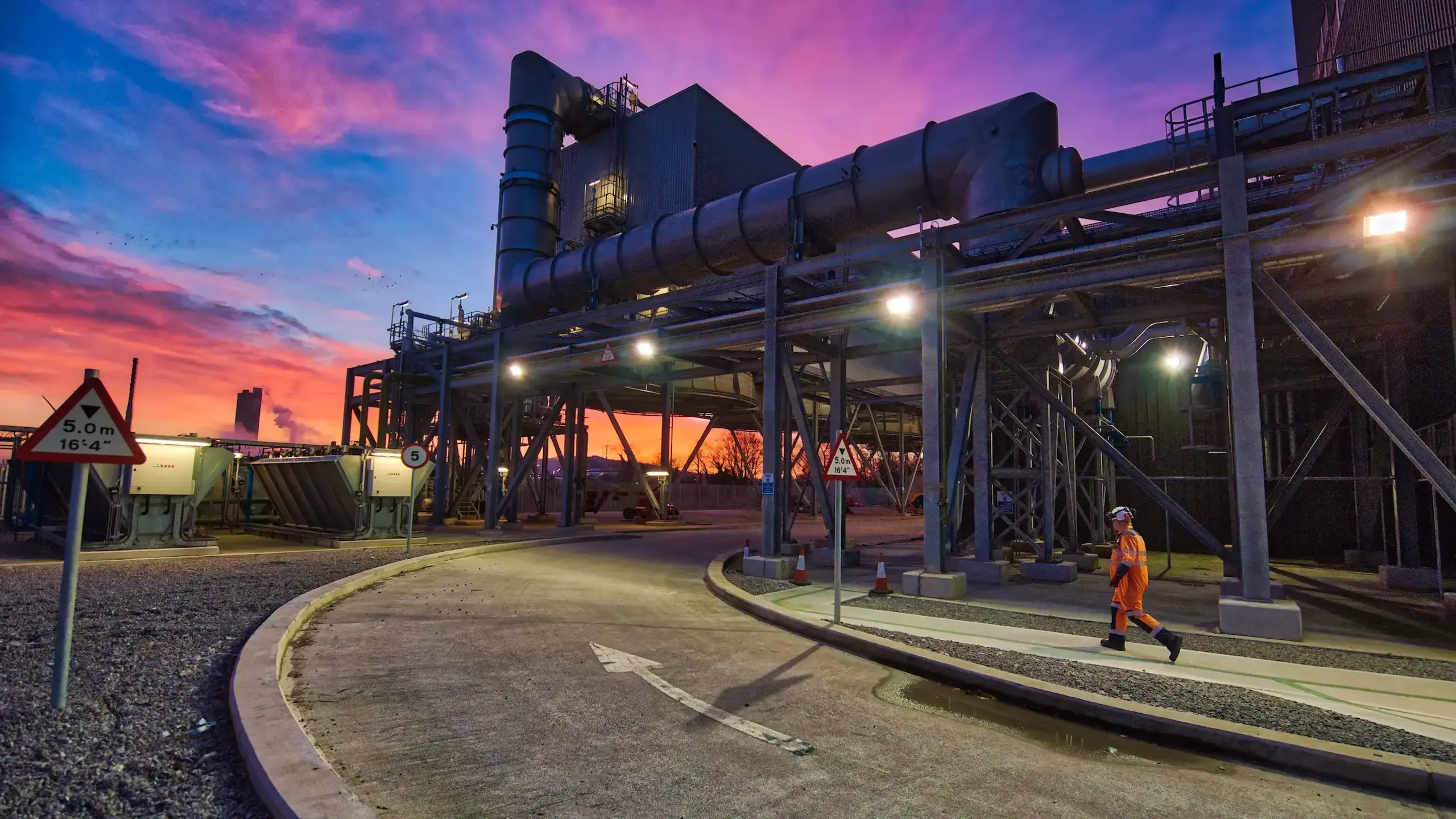
Bioenergy with carbon capture and storage (BECCS) is an engineered carbon removal technology that captures and stores CO₂, while simultaneously producing low-carbon electricity, using biomass as fuel, like our waste wood feedstock.
As the only scalable technology available today that can remove large quantities of CO₂ from the atmosphere, BECCS has a critical role to play in helping the UK to achieve its net zero targets.
Evero’s BECCS carbon removal projects
Evero’s sector-leading BECCS projects will contribute towards the carbon removals needed for the UK to achieve net zero.
Using only locally sourced, grade-C waste wood as the feedstock is considered the most sustainable way to create carbon removals with BECCS.
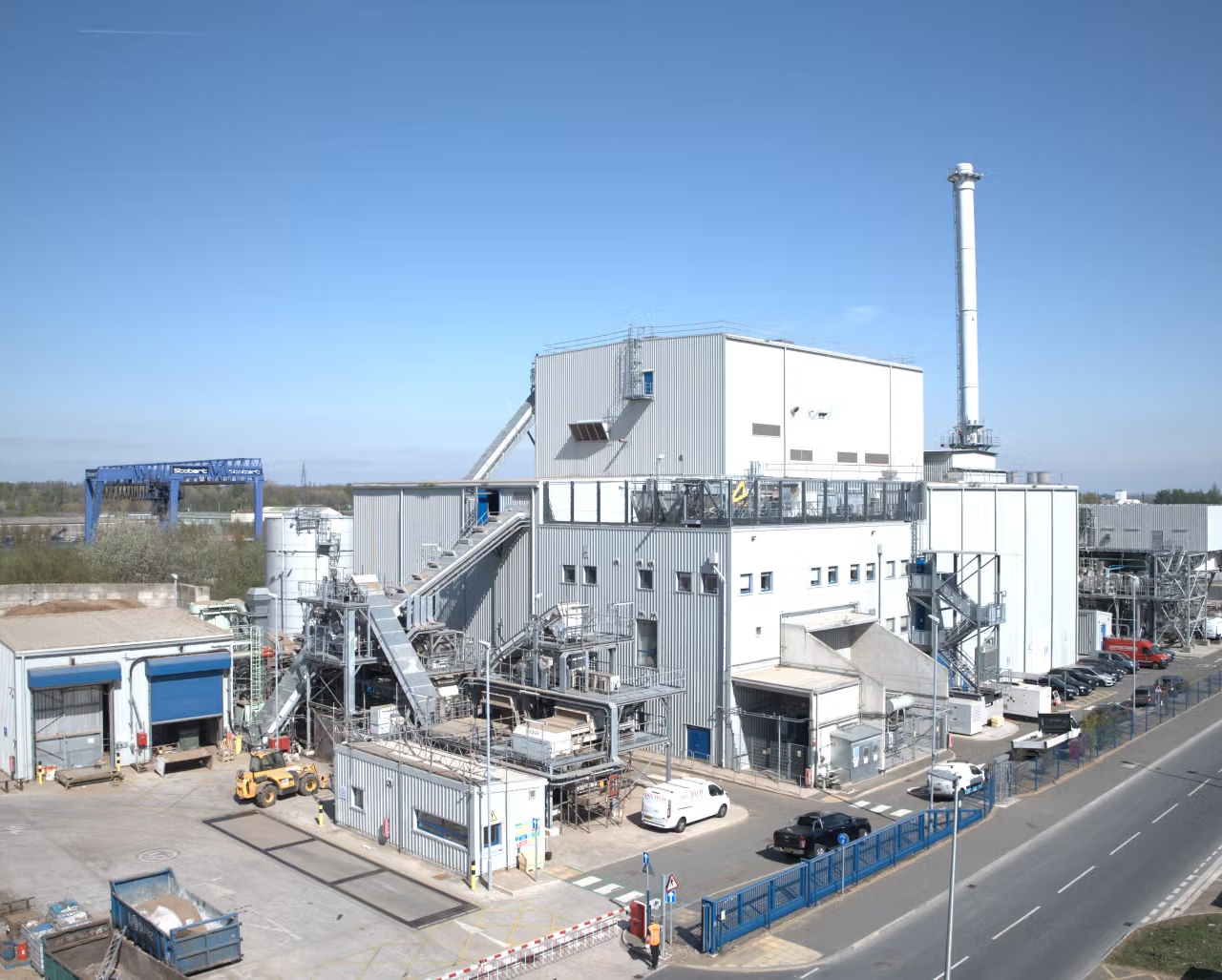
Two of our plants will be the first waste wood facilities in the UK to adopt this tried and tested technology and deliver the UK’s first engineered carbon removal credits on the Voluntary Carbon Market from 2030.
Both plants will also continue to process locally sourced waste wood, which would otherwise go into landfill, into renewable energy.
InBECCS
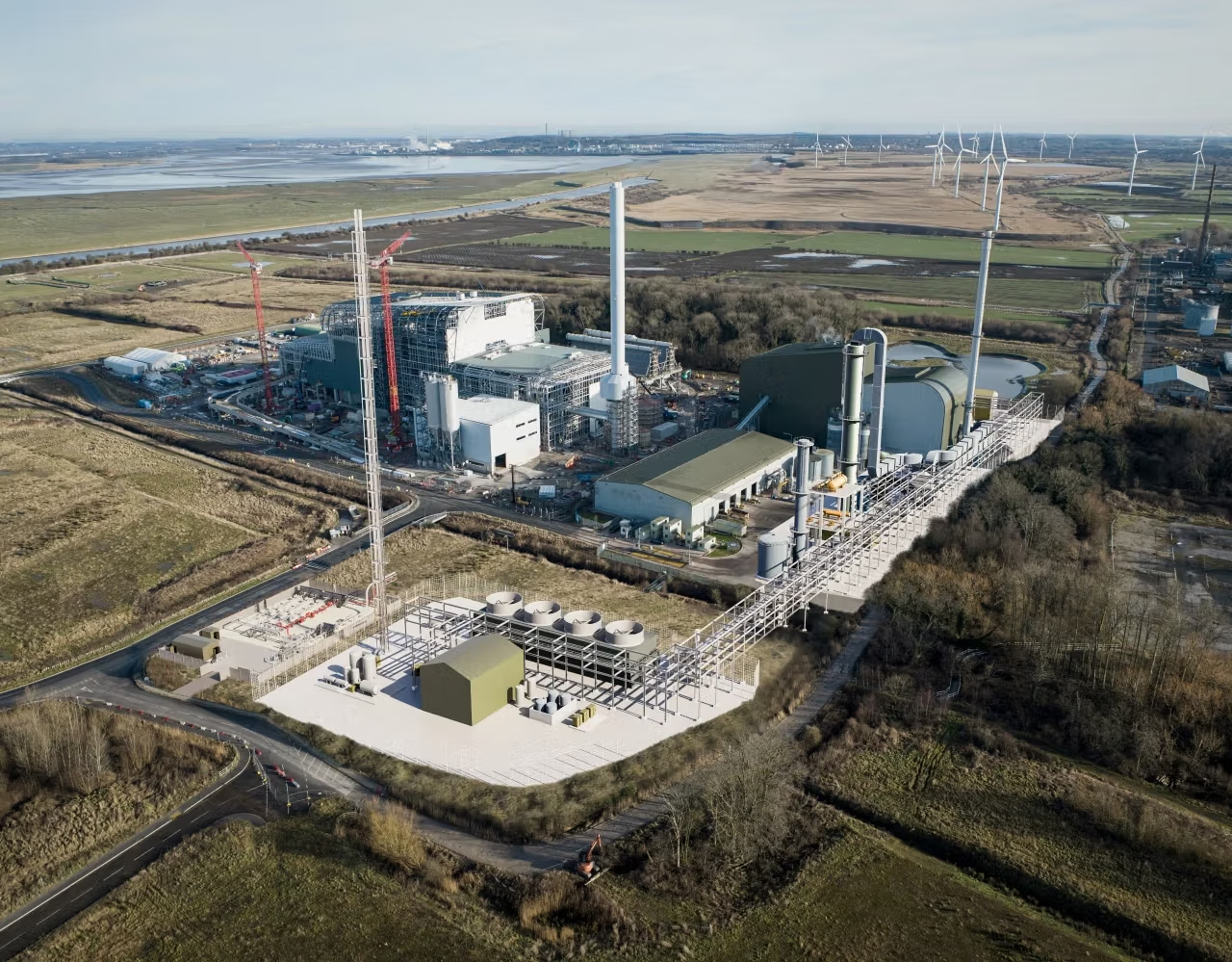
Our Ince Biopower Carbon Capture and Storage (InBECCS) project is the UK’s first at-scale engineered carbon removal project, setting the benchmark for a new industry.
Listed as a priority project by the UK government, it will be operational from 2030 and will see up to 250,000 tonnes of carbon captured annually.
Once constructed, the project will connect to HyNet, the UK’s most advanced carbon capture cluster. Find out more about the infrastructure that will transport and store the CO₂.
You can find InBECCS listed on the Puro.Earth Future Facilities registry.
MBECCS
The Mersey Bioenergy Carbon Capture and Storage (MBECCS) project is the second of our carbon capture projects.
Once constructed, it will see up to 200,000 tonnes of carbon captured annually.

21.8
MtCO₂e of greenhouse gas removals needed per year by 2035

9
MtCO₂e of greenhouse gas removals from waste wood feedstocks per year

60,000
Jobs potential from the GGR sector

400,000
Cars off the road equivalent per year from Evero’s BECCS projects
Addressing the climate crisis
Simply reducing emissions is no longer sufficient to achieve the crucial 1.5°C target. The world needs engineered carbon removals alongside emissions reductions to achieve this goal.
Sustainability
Our projects will generate positive impacts for both the climate and the local community by continuing our use of local suppliers and safeguarding jobs.
Permanence
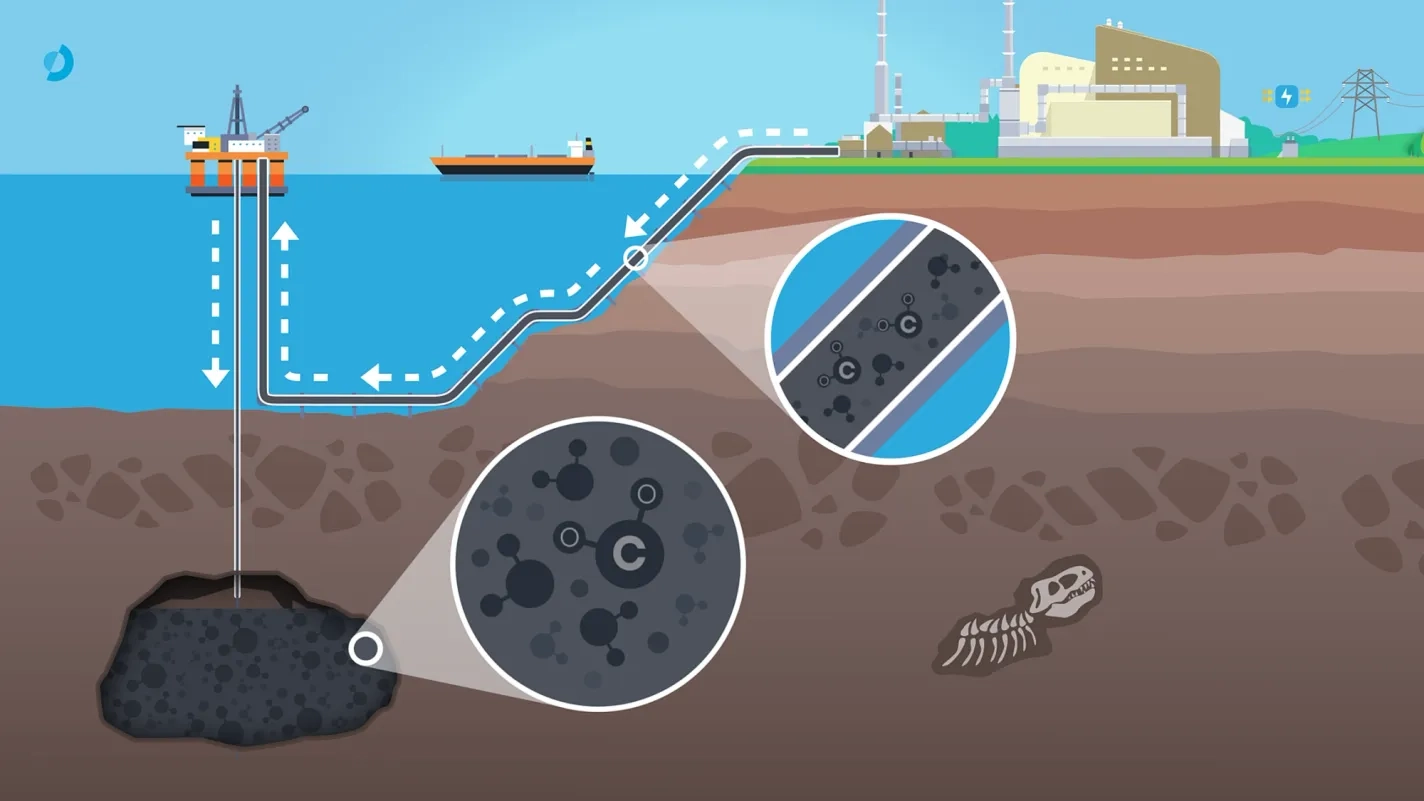
The HyNet cluster will store captured CO₂ in geological formations for thousands of years with minimal risk of reversal.
At Evero carbon capture is a part of our mission to restore balance in everything we do.
Check out our video to see how Evero do things differently.
FAQs
What is Carbon Capture?
Carbon dioxide (CO₂) capture and storage (CCS) involves separating CO₂ from industrial and energy-related sources, transporting it to a storage location — in this case depleted gas fields in the Irish Sea — and isolating it from the atmosphere for the long term.
What is Biogenic CO₂?
Biogenic CO₂ refers to the carbon present in wood, paper, grass trimmings, and other biofuels, which was initially extracted from the atmosphere via photosynthesis. Under natural conditions, this carbon would eventually return to the atmosphere as CO₂ through degradation processes. Biogenic CO₂ is an essential component of the natural carbon cycle.
What are negative emissions?
Negative emissions can be achieved through a range of nature-based solutions or through man-made technologies designed to remove CO₂ at scale. These techniques can create a negative emissions balance, where more CO₂ is removed from the atmosphere than is emitted.
Why is Carbon Capture important for decarbonisation?
Carbon Capture and Storage is the only large-scale way to reduce atmospheric CO₂. CCS is an enabler of least-cost low-carbon hydrogen production, which can support the decarbonisation of other parts of the energy system, such as industry, trucks, and ships. CCUS plays an enabling role in the provision of affordable and clean energy and can support the decarbonisation of industry, both through direct emission reductions and also indirectly through the supply of low carbon power.
Is Carbon Capture sustainable?
Carbon capture is a part of the broader sustainable practice of reducing CO₂ emissions. As we install CCS on our Ince and Mersey sites by 2029, we will create permanent negative emissions, in addition to the existing benefits of generating electricity and avoiding material going to landfill. This is why Evero’s Carbon Removals are the most sustainable form of Carbon Removals.

Technology partner

We have chosen to partner with Mitsubishi Heavy Industries for our Carbon Capture project. Their technology has been commercially deployed at sixteen locations worldwide.

Get in touch with our Chief Commercial Officer, Neil Bennett, to find out how you can make a positive impact by purchasing carbon removals.